Wednesday, 28 June 2017

Sunday in Old Books

The Burntwood bookshop, as seen on Google Street View: these days, it's a B&B but still owned by the same guys.

Memories of a bookshop…

In the collective memory of those who were around to see it, the summer of 1976 was a stunner, nay a ‘scorcher’ as the popular press of the day no doubt assured its readers. What’s less well remembered is that 1975 ran it very close, with several unbroken weeks of hot, sunny weather. But it’s to the summer of ’76 that I return this time, specifically the last weekend in June.

My diary for that year informs me that Sunday June 27th was the ‘2nd after Trinity.’ That’s as maybe: for me, it was little short of an epiphany. I’d been chasing old books for a couple of years by this time – not great literature, you understand, but its antithesis, ie. anything remotely connected with an old and, by extension, good television programme. Anything pre-1970 was automatically good, as far as I was concerned (although I wouldn’t have extended that definition far beyond the somewhat narrow remit of filmed adventure series and sitcoms).

The main problem with collecting old books as a hobby was finding suitable sources of supply. Jumble sales were a good bet, and in the mid-70s could usually be relied upon to turn up one or other of the many Gerry Anderson annual spin-offs. Book fairs offered occasional paperback tie-ins of The Man from UNCLE and The Avengers amongst others, but such affairs were few and far between. Around 1974 I’d located a small secondhand bookshop in Wylde Green on the fringes of Birmingham, which had proved an excellent source of vintage Giles cartoon annuals, and I was constantly on the lookout for similar establishments.

In the first few months of 1976 I sent away for a catalogue of secondhand book dealers: this proved to be a typewritten and mimeographed affair, stapled together in the manner of a school magazine. Most of the advertisers were too distant to be of any use, but there were a couple close to home. On Saturday 12th June, a blandly overcast day, I persuaded my dad to drive myself and my brother over to Burton-On-Trent where there was not one but two old bookshops. One of them was a ramshackle single-storey building, the other a more conventional shop where modern ‘remaindered’ books were sold alongside a selection of older items. Neither shop yielded much of interest: I picked up a Bonanza annual (later discovering such items to be ten-a-penny in the world of old books) but generally the trip was a disappointment, a dull affair for a dull morning, and it was a long time before we went back.

By Sunday 27th June the weather had improved: we didn’t know it but we stood poised at the brink of an oustanding summer. That morning, while the Sunday dinner was cooking, we set off under cloudless blue skies to investigate another bookshop not far from home. Royden Smith was an antique dealer on the edge of Burntwood, near Lichfield, and his shop, a converted cottage, comprised a small front room of vintage nick-nacks, from which several other rooms opened out, these other rooms being given over to shelf after shelf of secondhand books. Having lived in Lichfield until the age of six, the trip had a pleasingly nostalgic quality, and the roads are little changed even today.

Perhaps the greatest novelty of all was the fact of the shop’s opening hours. In the mid-1970s, hardly any shops opened on a Sunday, barring petrol stations and newsagents. Had I looked further afield, I might well have discovered similar shops keeping similar hours, but to me, the ‘old bookshop in Burntwood’ was unique. Royden Smith, a character straight out of Round the Horne, greeted us warmly, and on learning of our quest to locate old childrens’ books, directed us to investigate the stables to the rear of the premises.

Aside from ourselves, the place was deserted. A back door led out into a cobbled yard strewn with odd items of antique farm machinery, rust-pocked garden furniture and chimneypots. Under the brilliant June sunshine, a soporific silence held sway. The yard was surrounded by outbuildings, the largest of which was a former stable of two storeys. Dust motes swam in the sunbeams as we stepped inside. What I saw in there stunned me (I was easily impressed at the age of fifteen, but this was a genuinely remarkable moment). We found ourselves in an Aladdin’s Cave – nay, a Tutenkhamen’s tomb – of old books. Annuals dating back to the 1940s lay piled on every hand, whilst the walls were lined with hardbacks and paperbacks of unguessable antiquity, some of which had most likely lain unread since before the war. Almost immediately, I picked up a near mint copy of the first Man from UNCLE annual, an item I’d never previously seen. Multiple copies of the 1969 Saint annual were also available, and duly gathered up, along with Stingray, Z Cars and a handful of paperbacks. We returned to the front of the shop with our arms full. None of the annuals was priced at much more than twenty or thirty pence, while paperbacks were to be had for even less. In retrospect, I regret passing up a 1940s Beano book (now worth several hundred pounds), but at the time it seemed a strange, alien artefact from an era long before I was born. May dad forked out for all the items, and Mr. Smith was pleased that we’d had a fruitful trip, even though he can’t have made much more than a couple of pounds on the deal. The next visit would not be long in coming…

In the months to come, Royden Smith’s shop (I only learned his name many years later) would prove a rich source for Giles annuals, Gerry Anderson items and untold other artefacts. The only time I ever raised an eyebrow was when, in the 1990s, I asked if they had ‘anything on Nöel Coward.’ Royden and his partner were always charming, the former in a fairly old-school camp manner, and are still going strong as far as I’m aware, having converted their premises into a guest house. The bookshop was still trading into the early part of this century, my last visit coming around 2002, but it’s that first visit that remains imprinted in the memory, coming as it did in the first weeks of what would turn out to be a record-breaking summer. Nothing else ever quite topped it: the sheer excitement of knowing we’d stumbled upon such a treasure trove feels almost dreamlike in retrospect. Clearly, no one had gone there before us in search of 1960s annuals, allowing a huge stash to accumulate.

That whole weekend, in fact, held something of an epic quality for me; and I don’t think it would be overstating things to make the claim that this specific moment in time was when nostalgia for old television series really got started. On the Saturday evening, our local ITV station, ATV, had embarked on a series of summer repeats of nostalgic old television, in response to a lively discussion on the letters page of the Birmingham Evening Mail. Suddenly, people were sharing their memories of old telly and, instead of complaining about repeats, wondering why we couldn’t have more of them. This kind of thing had never happened before, certainly not in my experience, and the resulting repeats of American series including 77 Sunset Strip and Rawhide would lead directly to ATV’s most important repeat broadcast, The Prisoner, at the end of August that same year.

The simple reality is that The Prisoner was one of the few British-made series of the 1960s to which ATV still possessed broadcast rights. Such titles were generally made available for three screenings, under terms negotiated with Equity, and by 1976 most of the classic ITC series had enjoyed their full quota, Strange Report, broadcast from March of that year, being one of the last available to ATV in the Midlands. Responding to the deluge of letters requesting old programmes, ATV announced, via the pages of the Evening Mail, that The Prisoner would be making a comeback later in the year. For all that it was on its third outing, that repeat run would ultimately prove to be more important and influential than the original 1967 broadcast.

I think it’s fair to argue that it was this single repeat screening which kickstarted the whole TV nostalgia industry as we know it today, and which continues to keep me in gainful employment. Fans who came together as a result of that Prisoner repeat would discover a shared interest in similar items from the back pages of television, film, comics, you name it. Many of them would go on to become the creators of new generations of entertainment, others the custodians of the past (I’m aware that I may be starting to sound rather like Tom Baker’s Doctor arguing the case for not destroying the Daleks... which, if you think about it, is exactly what the BBC ended up doing.)

For me, then, it feels significant that, in the space of a single weekend, ATV kicked off their Play it Again series of old telly while, some twelve hours later, I opened the door on a goldmine of nostagic publications, all of them relating to old television programmes.


That peerless summer of 1976 was about to enter the record books, but for me, it will always be topped and tailed in the memory by old telly…
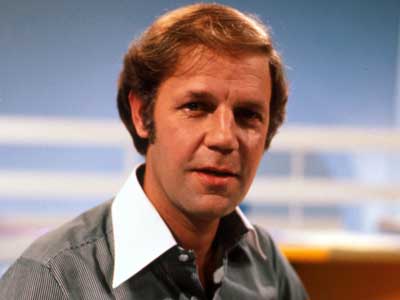
Thursday, 22 June 2017

Remembering Brian Cant


I first saw Brian Cant on Monday 26th July, 1965 – if that sounds too specific, then it may well be; but it was certainly within have a day or two of that date, which marked the first appearance on BBC1 of Play School. The programme had been broadcast since April 1964 on weekday mornings, on the newly-launched BBC2, with Cant’s first credited appearance (according to the Radio Times) coming in September of the same year. Its BBC1 repeat, introduced in the summer of 1965, was a clear sign of the programme’s growing popularity, and with BBC2 still a relative luxury (reception required a 625-line receiver), this would have been many young viewers’ introduction to the series.

Play School replaced Watch With Mother in its traditional post-lunchtime slot of 1.30pm, although WWM had also been broadcast at 10.45am for some time prior to this, and would continue at the same time for the forseeable future (my earliest recollections of Watch With Mother are of seeing it in this mid-morning slot).

Brian Cant was co-presenter of Play School’s first week on BBC1, a fact which may have helped to cement his reputation as one of the bastions of children’s television, although the presenters alternated week by week, drawn from a team of familiar faces, some of whom (Carol Chell, Rick Jones) are still dimly remembered, whilst others – young actors just out of drama school – came and went without registering at all in the popular consciousness. For most viewers, Brian Cant was Play School: his easygoing, avuncular style came to characterise the programme, and was widely and less successfully imitated by others.

He was sufficiently familiar for me to recognise his voice as the narrator of Gordon Murray’s Camberwick Green when it came to air in January 1966. An LP record swiftly followed (on EMI’s budget Music for Pleasure label) once again featuring Brian Cant’s narration and his simple, unaffected singing, accompanied by Freddie Phillips’ double-tracked Spanish guitar. In those pre-video days, the LP records of Camberwick Green (and later, Trumpton) were the only means of revisiting the programmes while they were off air, and believe me, those records were played a lot. So it’s no exaggeration to say that, for me, Brian Cant was the soul of Trumptonshire. From his recorded narrative, I could easily reconstruct the worlds of Trumpton and Camberwick Green in my imagination, in some cases visualising stories I had yet to see on screen.

Brian Cant not only told the story, but also provided, in the context of his narration, the voices for all the characters, male and female. Somehow, this seemed entirely right. It’s impossible to imagine those series voiced by multiple actors. Cant’s vocal range wasn’t vast: for many characters, he relied on subtle variations of his own speaking voice, aside from which he offered a pompous voice for authority figures (such as the Mayor of Trumpton), a ‘working class’ accent (for the tradesmen of Trumpton and Chigley) and a higher register female/child voice. Within that narrow range, however, his ear for timing and nuance was spot-on.

Gordon Murray’s puppet films were produced on a level that would nowadays be considered amateur, but the results were never less than professional. Rather than pay for expensive studio time, the soundtracks were recorded at home, with Brian Cant taking up residence in a wardrobe in an effort to minimise the sound of traffic noise from outside. This wasn’t entirely successful, as the LP records reveal: one can often hear, faintly, the sound of vehicles going by – real vehicles as opposed to the likes of the Trumpton fire engine, or Mickey Murphy’s van – and Cant’s narration has a distinctive ‘wardobey’ ambiance. Noticing these ‘defects’ was all part of the fun of listening to the LPs, quite apart from the opportunity to learn the songs on guitar.

The songs were something else. Composed by session guitarist Freddie Phillips to lyrics supplied by Gordon Murray, they were nothing less than character sketches in miniature, with some quick-fire wordplay reminiscent of Gilbert and Sullivan (not that I noticed this at the time). They were also a sight more sophisticated than anything else on children’s television. Brian Cant was no great shakes as a singer, but his workmanlike, almost naive delivery leant considerable charm to these wonderful compositions. Camberwick Green offered simple but memorable melodies to which any young viewer could sing along, but when it came to Trumpton, Freddie Phillips upped the ante considerably, with sophisticated chord voicings and modal compositions such as Mrs. Cobbett, the flower-seller’s song. Mr. Robinson, the plumber, had one of the best songs of all, with a brilliant counter-16 section modulating from E Major to a gloomy A Minor 6th, that rocked backwards and forwards to a diminished second before bursting out into the brilliant resolution of D Major for the last verse as our hero triumphs over the adversity of a leaking water tank. Fixing a hole where the rain got in? Much has been written of the genius of Lennon and McCartney, but this was brilliance of a different order, and all in the service of a children’s song about a plumber! 

Brian Cant may have been out of vision for the Trumptonshire trilogy, but he was back in front of the cameras for Play School’s ‘grown-up’ cousin, Play Away. This was a programme I never had much time for – it always felt too juvenile for an older audience, and not enough of a step up from its predecessor; but I was in a minority, and Play Away remained popular for a couple of generations. As to growing up, I never ceased to be fascinated by Trumpton, and made efforts to see it whenever I could while the series remained on air (for the record, Camberwick Green, Trumpton and Chigley received their last BBC screening in 1985, under the children’s lunchtime umbrella title See-Saw).

It was the unique blend of Gordon Murray’s puppets (brilliantly animated by Bob Bura and John Hardwick), Freddie Phillips’ music, and Brian Cant’s charming narration that made the Trumptonshire trilogy so successful. That kind of chemistry doesn’t happen often in television or film, and there’s a timelessness about those series that I believe would guarantee their success well into the future. They were nostalgic from the word go: few places in England are remotely like Trumptonshire, yet it's undeniably familiar. Like the creations of Gerry Anderson, Camberwick Green and its sequels presented us with a fully realised world, an alternate reality, if you like, where the fire brigade is never called upon to put out a fire, and there’s a folk dance every evening at the biscuit factory.


Brian Cant may no longer be with us, but Trumptonshire lives on…

Sunday, 11 June 2017

Playing VHS With Death...


In 1980, the first domestic video recorder arrived in our household. It was one of the early, top-loading models with huge metal switches and no remote control, provided by our local branch of Radio Rentals. I was not earning a living at this point, but I funded the monthly rental payments (scandalously, you may think, from my student grant). After all, it was I who would be making the most use of this new toy, and had I needed to justify it to myself, I could have argued that it would provide a handy research tool for my Communication Studies degree. The degree itself was a worthless endeavour, curated by bored lecturers across a range of barely-related disciplines, but it did touch on textual analysis of television programmes (principally, and inexplicably, Nationwide), in which capacity the ability to keep copies of said programmes, and endlessly rewind and replay content was, of course, invaluable.

I think the first thing I recorded was either a Laurel & Hardy film or an episode of Steptoe & Son. So much for those academic credentials…

In those early days – this was the latter part of 1980 – blank video tapes did not come cheap. A three-hour E-180 for under a tenner was considered something of a bargain, with £12 or more being the typical going rate. Clearly, there could be no prospect of compiling an archive of taped programmes. I decided that I would keep ‘selected examples’ of certain series (for example, the current run of the BBC’s Shoestring), but complete series were out of the question. This didn’t stop me from taping (and keeping) every episode of Steptoe and Son that the BBC repeated during a brief run that autumn.

The policy had gone out of the window by the time Thunderbirds returned the following year, and I already had getting on for a hundred tapes of recorded material, all of which I intended to keep for future reference. The VHS machine was, of course, used for the practical purpose of recording programmes that I was unable to watch on transmission, the idea being to catch up with them during the next few days. But days all too easily turned into months… and, in their turn, years. I still have VHS recordings that I have yet to catch up with – in some cases, dating back to the 1980s. It’s rare for me to actually pull out and watch a VHS tape these days, but on an evening last week, that’s exactly what I did.

In July 1993, BBC2 offered a late-night screening of Ingmar Bergman’s iconic classic The Seventh Seal. I was interested to see it, having recently discovered Scott Walker’s song of the same name, the lyrics of which are a loose reading of the plot – a knight returns from the crusades, discovers his homeland ravaged by plague, and plays chess with the hooded figure of death in the hope of winning salvation. Trouble is, this black and white classic had been tucked away in the late-night graveyard in which such items could once be found: the Sgt Bilko Hour, if you will (Bilkos being a staple of the round-midnight BBC schedules during this era). With a start time of five past midnight and an end time of God knows what unearthly hour, the obvious solution was to record it on the timer. In fact, what I actually did was to start the recording manually, and set the machine to turn itself off two hours later – a facility that certain VHS recorders had evolved by this time.

At the end of the recording, a complete 'end-of-programmes-for-tonight' piece of continuity is preserved, quite basic in presentation, comprising the BBC2 clock on a shaded background. Yet ironically, this continuity is now of considerably greater interest than the recording of the film itself (an old, rather worn print that the BBC had owned since 1967). More such items follow on the tape, which was next put to use on February 23rd, 1994, to record an episode from the documentary series The Underworld, a look at London’s gangland of the 50s and 60s. Thus is preserved the national weather forecast, presented by Suzanne Charlton (daughter of Bobby), which showed a band of snow across the midlands and the north… no mention at all of plague...

The tape probably hadn’t been played since 1994, but last week, having listened again to Scott Walker’s fourth solo album (which begins with the song The Seventh Seal), I decided it was time at last to expose myself to Bergman’s classic. It is, of course, available on blu-ray and has no doubt been restored to the standard one might expect of a movie once hailed as one of the greatest achievements in cinema. But why waste time and money, when there was a VHS copy awaiting me in the garage? 

Seeing The Seventh Seal for the first time was an interesting experience in itself. Such a film comes carrying a huge portmanteau of expectation… it's a classic, iconic imagery, masterpiece, etc. Most of this hyperbole stems from a few breathless reviews by American critics around the time of the film's release in 1957, and not even Bergman himself considered it his best work. In fact, the whole enterprise has very much the appearance of those old Richard Green Robin Hood capers, crossed with scenes that recall nothing less than Monty Python and the Holy Grail. The history is all over the place, with crusaders, witch-trials and medieval peasants sharing the same time and place. The famous chess-game-with-death motif is probably the film's best-known element, much parodied by the likes of Bill and Ted and, of course, Monty Python. Having finally watched it, I can kind of understand why it took so long for me to get around to it – you have to be in the mood for a film like this, even though it is nowhere near as dark and gothic as its reputation suggests. But The Seventh Seal's meditations on mortality seemed somehow fitting. When I taped the film in 1993, I can hardly have imagined it would take nearly 24 years before I got round to watching it. That’s the same amount of time as had elapsed between Scott Walker’s song and the BBC2 broadcast. Or, to look at it from the other direction, another 24 years on from today will make me eighty... assuming death doesn’t checkmate me before then.

Collections are a constant reminder of mortality. Videotapes and photographs, with their snapshots of moments in time, even more so. For any collector, the constant nagging question is ‘when will I ever find time to look at/watch/read all this stuff again?’ I’m well aware that there is insufficient time left for me to revist every single one of the VHS recordings I kept for ‘posterity’, unless I committed to doing that and nothing else for the forseeable future. Of course, I know that's not going to happen. What of the books, DVDs and LPs? What of actually having a life outside of being a curator of old recordings?

Logic dictates that I should ditch those old tapes and live for the moment, but I know I’ll hang onto them, just in case, as happened last week, I feel the need to unearth an item from thirty years ago. It may have taken almost a quarter century for me to get round to The Seventh Seal, but I have older recordings as yet unviewed. I may never get to see them.

 I am, indeed, playing VHS with death…

Thursday, 1 June 2017

I've Got Nothing to Say, but It's Okay...


The Beatles: An Illustrated Record, first edition, 1975. John Lennon read it and even wrote in with an addendum for the next edition: 'set the Illustrated Record straight' he wrote.


Remembering Remembering the Beatles… part two


Around 1975, a book appeared in our local branch of WH Smith that provided the first decent history of the Beatles that I’d seen in print. Formatted to the same dimensions as an LP cover, it was entitled The Beatles: An Illustrated Record, and had been written by NME journalists Roy Carr and Tony Tyler. Somewhat surprisingly, Carr and Tyler didn’t stop short of criticising the fabs’ efforts whenever they found them wanting. Beatles for Sale they considered decidedly below par, with songs like What You’re Doing and Every Little Thing dismissed by the pair as ‘domestic gripes.’ Rain, now rightly regarded as a classic, they wrote off as ‘an exercise in primitive psychedelia before the word, or its creative limitations had been defined.’ O-kay... I hadn’t even heard Rain at the time, and here were two music industry hacks telling me it was barely worth wasting my time on (my 1976 diary reveals that it was on April 14th of that year when I finally got to hear Rain, courtesy of a friend who owned the Paperback Writer single. In a neat meterological coincidence, it was raining torrentially at the time...)

Carr and Tyler’s most withering scorn, however, was reserved for the solo works of George Harrison, whose post-Beatles output they roundly rubbished. Indeed, none of the band got off lightly when it came to the section in the book entitled ‘The Solo Years’, with all four judged to have turned in some less than creditable efforts in the aftermath of the break-up. To set this in some kind of context, it needs to be borne in mind that the music press, in common with pretty well the rest of the human race, circa the mid-1970s, still clung onto the notion that the Beatles would somehow, some day, resolve the differences that had driven them apart and reunite to create great music once again. Until then, we just had to put up with whatever solo efforts they chose to foist upon a world that had once worshipped at the altar of the eight-armed deity. One day, reason would prevail, and the Beatles would return to sweep all before them. A vain hope it may seem in retrospect, but it was worth clinging on to. My 1976 diary reports a press story of the day telling of a promoter who had offered insane amounts of money to all four Beatles if they would reunite for just one concert. Such tales were par for the course in the chilly musical hinterland we inhabited without the Beatles…


'Rain – an exercise in primitive psychedelia'. Indeed… but Carr and Tyler's book certainly looked very nice.

For all its criticisms, The Beatles: An Illustrated Record became, for me, a sort of Haynes Manual for the fab four, a straight ahead, no-frills telling of their story, complete with reviews of all the albums, discussion of key points in the band’s career, and even a chapter on bootlegs, my first encounter with this now familiar expression. And there were plenty of nice pictures. In retrospect, the pictorial content of the book seems no more than a single ice crystal on the tip of an iceberg of Titanic-sinking proportions, to which more material has been added with every passing year, as forgotten caches of press and private photographs are uncovered. In fact, I doubt that anyone can ever hope to own every single image of the Beatles. But back in 1975, I was quite happy with the contents of Carr and Tyler’s book – it had full-sized pictures of every album cover, alongside an assortment of imagery covering their films, concerts and other endeavours. A tone of barely suppressed cynicism pervaded the whole endeavour: ‘note the absence of guitar leads’ read the caption to a colour pic from the 1965 television special The Music of Lennon & McCartney, showing John and George miming with Rickenbacker and Gretsch respectively.

I sometimes wonder if it was Carr and Tyler’s failure to toe the party line that provided the first seeds for the cynical attitude I would adopt towards popular culture as I grew up. These days, when every vain, exploitative piece of music or film making seems to arrive with instant critical approval from that uncritical mass known as the online media, I think we could use a lot more healthy cynicism, of the Carr/Tyler variety. Not every creative endeavour by every individual is a paragon of excellence. In fact, I’d suggest that more than 95% are the opposite, and utterly worthless. Neither do I appreciate creators telling me online how good they think their latest album/comic/whatever happens to be. I’ll listen to an objective opinion when I hear one, thanks very much. To quote John Lennon in Good Morning, Good Morning, 'I've got nothing to say, but it's okay.' That, to me, is the mantra for much contemporary pop culture...


Meantime, the Beatles, of whom there is only one valid opinion, and Sgt Pepper, which today turns fifty, reminding us, as if we needed it, that there has been nothing else to equal it in half a century. Absolutely nothing, from no-one. Listening out for the next Sgt. Pepper is like probing the cosmos for signals from intelligent life…


Fifty Years Ago Today, it was Twenty Years Ago Today...

Remembering Remembering the Beatles: Part One


June 1st 1967. As every music fan knows, the release date of the Beatles’ Sgt Pepper’s Lonely Hearts Club Band. Arguably, one of the most significant dates in the history of popular culture. Like today, June 1st 1967 fell on a Thursday. It was half term, so I can't claim to have been distracted by school work. But I was utterly oblivious to what had happened.

Were I to plot my childhood awareness of the Beatles’ activities on a graph, summer 1967 would see something of a trough. I’d been well aware that there was a phenomenon called the Beatles from the age of about two and a half: I can recollect both She Loves You and I Want to Hold Your Hand getting their first round of airplay courtesy of the BBC Light Programme. More clearly, I remember Ticket to Ride sitting at number one in the hit parade, around Easter 1965. I remember seeing the Beatles on TV miming to I Feel Fine, a performance which helped to define my own personal image of the band. I remember right up to Help! and then…

Thinking back, I was curious as to why I had somehow missed out on significant singles like Day Tripper/ We Can Work It Out and Paperback Writer. Of the former tracks I have no recollection prior to acquiring my first Beatles album, A Collection of Beatles Oldies, in the spring of 1974. ‘Blimey,’ I thought, on hearing the introductory riff to Day Tripper: ‘this is all right!’ As for Paperback Writer, I must have been dimly aware of it, because I recognised it when the BBC used it as the introductory music for a book discussion programme during the 1970s. But as to whether I heard it back in 1966, I’m less certain. I have clear recollections of The Mamas and the Papas’ Monday Monday, which was in the charts around the same time; but I’m less sure on Paperback Writer. Why should this be?

I’ve come up with a triumvirate of reasons to explain this anomaly in my memories of the Beatles’ singles. First is the simple fact of exactly which songs I was able to hear on the radio. During the daytime, we listened primarily to either the BBC Light Programme – the source of all popular music – or the Home Service. The latter would be instantly recognisable to any modern listener, today's Radio 4 being barely any different. But the Light Programme was as its name suggests: light, and relatively undemanding. Contemporary pop music was just part of a mix of contemporary and light classical recordings that comprised the bulk of the station’s airplay, interspersed with comedy and variety shows. But the kind of pop music that got played on the Light Programme – certainly during the hours when I would have been able to listen – was generally of a kind considered ‘safe for broadcast’ by whoever made such decisions at Broadcasting House. The ‘heavier’ pop items of the day were not to be found playlisted on the likes of Housewive’s Choice nor the Saturday morning children’s request show fronted by, amongst others, Blue Peter’s Christopher Trace.

I’m not saying unequivocally that the Light Programme never played records by bands like the Who, the Kinks or the Stones; but their heavier releases certainly didn’t seem to figure in the playlist to the same extent as, say, Dominique by the Singing Nun, or Josh MacRae’s Messing About on the River. I heard Kenneth Williams' comedy monologue ‘Hand up your Sticks’ more times than I Can’t Explain, or You Really Got Me, neither of which made it into my awareness until years after their release. This, then, might be one reason why I missed out on some of the ‘heavier’ Beatle singles. But there’s another reason, and it’s significant.

In September of 1965, Thunderbirds arrived on television. It had been heavily trailed in the preceding weeks, and there was no way on earth that I was going to miss it. In the ATV region where I lived, it was broadcast at 7.30 on Thursday evenings – meaning that it clashed with Top of the Pops which, up to this point, had been a programme I saw quite regularly. Charting my memories of pop singles, I’ve noted a distinct dip beginning around late 1965 and lasting until spring of the following year: a dip that corresponds almost exactly to the first run of Thunderbirds. The Sunday chart show Pick of the Pops was a programme which I discovered a year or two later, so that at this time, TOTP presented my only opportunity to see and hear some of the edgier new artists who were making waves in the pop world. Without it, I missed several key releases.

Another factor, also occurring around this time, is that I started school. This happened when I turned five, in March of 1966. Prior to this, having been at home during the day, I’d had much more opportunity to hear new records when they were played on the radio. From spring ‘66 onwards, my listening was essentially confined to that Saturday morning show, adding the chart rundown from somewhere in late 1967.


Thus it was that, at the fulcrum moment in June 1967, I was not tuned in; neither, for that matter, was I turned on or dropped out… the only LSD I was aware of was pounds, shillings and pence. The first person I heard singing Sgt Pepper's Lonely Hearts Club Band was, sadly, Petula Clarke, on a Beatles-themed TV show around 1973. And at that point, I had genuinely never heard of it before...

Tuesday, 23 May 2017

The grown-up world we were never to inhabit...


I recently bought a couple of vintage petrol pump globes (above and left). You have to be of a certain age (around fifty or over) to even remember what these were, since they were already being phased out during the nineteen sixties. Prior to that time, the pumps at petrol stations had acquired an almost anthropomorphic quality, and stood, like seven-foot-high giants, in rows of three or more on the narrow concrete islands that were a feature of most filling station forecourts.

The ‘heads’ of these mechanical monsters took the form of illuminated globes, often distinctively-styled to reflect the petrol company’s logo: Esso globes were ovoid (and occasionally spherical), BP’s shield-shaped (changed to a simple cube during the early 60s), whilst the greatest of all were those of the Shell brand: huge glass shells embazoned with the company name, which came in a number of colours according to grade: white for normal and economy, blue for high-octane ‘Super Shell’, and another shade (pink?) for diesel. These were by no means cheap items, but once upon a time they graced pretty well every petrol station forecourt across the world.

In Britain if not elsewhere, their decorative potential as cool living room lamps led to many being stolen, rendering their pump bases ‘headless’ – a common sight during the last years of these petrol dinosaurs. For a time, the oil companies issued cheaper plastic or glass fibre replacements, but pump design was undergoing a revamp as a new generation of small, squat, headless examples took the place of the mid-50s giants, and vintage features like analogue clock dials were replaced by rotary displays. Glass globes were an unnecessary and showy expense... and accordingly, they were done away with.

These days, original glass petrol globes command huge prices: mint examples of the Esso ovoid can sell for over a thousand pounds, and it’s hard to find glass Shell globes for sale much below the mid hundreds. Not bad going when you consider that many of them were originally acquired by theft...

A typical 1960s Shell filling station…


In the 1960s, the business of filling up with petrol (or, less likely during that era, diesel) was a somewhat more sedate affair than it has become. Queues were unheard of, other than at times of national shortage, and yet the average filling station was usually of quite modest proportions, often with only a single stand of pumps. Nowadays, a typical petrol station might have two or three aisles offering maybe ten or twelve working pumps, each one dispensing all the different kinds of fuel available. A 1960s filling station, such as the one illustrated, might have had, at best, six; and each pump was limited to a specific grade of fuel. The only exceptions would have been the service areas on motorways which were just beginning to emerge during the decade.

…and Corgi's kit version (the illustrator evidently having used the above image as reference).


By the mid-60s, the big brands were long-established icons, and the largest of them are still with us today: Shell, Esso, BP. Of the big three, only Esso’s logo remains unchanged in fifty years (for some reason, I find this rather reassuring), while Shell has stuck rigidly to its late 60s/ early 70s image, and BP, slow to update, is now saddled with a kind of floral emblem which replaced its classic ‘shield’ logo some time during the last decade. I’m not quite sure what they’re trying to say there... is the floral device intended to suggest care for the environment? Whatever they’re at, the green and yellow colour scheme remains the same.

As a kid, I liked BP the least of all the petrol companies – not that you might have expected me to have an opinion on such things, but I did – and it was solely because of the green/yellow logo. Esso’s red white and blue seemed somehow more serious (maybe more masculine?), while by the mid-60s, Shell had settled on the red/yellow combination that still does service today.

A typical wayside filling station from the 1950s.

The fact that I even noticed such things as brands of petrol is telling: at the age of five or six I was already keenly aware of the ‘grown-up’ world of cars, petrol, architecture and suchlike, and found these items curiously alluring in a way that the artefacts of childhood were not. In short, I wanted to be old enough to drive a Triumph Herald like my dad, and to fill up at our local ‘Super National’ garage – a tiny forecourt of two pumps selling this defunct brand.

I say defunct, but I have a sneaking suspicion that there are still garages somewhere in the UK selling National-branded petrol, complete with its futuristic ‘Mr. Mercury’ logo in blue and yellow, itself a modern update of a 1930s emblem. The brand seemed to undergo a revival during the 1990s, but even in the 60s, National stations weren’t as common as those of the Shell/BP/Esso axis, although they were probably in fourth place after those global giants. Lesser brands of the era included VIP – with its orange and black logo; Gulf (a comparative newcomer in my experience: I saw my first station around 1968); and Regent. Of these names, Regent was already on the way out during the 60s, but I still remember seeing their rather dull stacked block logo on pump globes of the era.


Other brands came and went, most usually as a result of mergers within the oil industry. The Belgian Fina brand (Petrofina) had been around since the 1920s, but appeared to be on the wane during the ’60s: I knew their logo principally from model petrol pumps, and there never seemed to be any stations close to where we lived. In the 1990s, there was a short-lived Fina-branded station attached to the local Co-Op supermarket close to where I lived, but it now trades under the dreary pale green banner of the Co-Op itself.

By the time I finally became a customer for petrol, the whole filling station experience had altered out of all recognition, like so many other aspects of the adult world that I’d aspired to as a child. Now, increasingly, petrol was being sold at supermarkets, often forgoing oil company names in favour of the supermarket branding, and it was being sold by the litre as opposed to the gallon. Pumps, once presided over by men and women in liveried overalls, had become self-service during the 1970s. My one and only experience of being served by a pump attendant was at a tiny wayside filling station on the Scottish border in 1990, and the pump in use was a vintage example from the mid 60s; but I well remember my dad filling up in the 1960s at the little local station where we were served by a genial, white-overalled man whom my dad, after an archaic fashion of the times, addressed as ‘squire.’ I even remember being bought sweets from a filling station – the long-forgotten Opal Toffees, in fact – which seemed a novelty of ludicrously exciting proportions.

That’s another thing that’s changed. The average filling station these days offers a range of goods comparable to any small newsagent or supermarket, but back in the ’60s and ’70s – and even until well into the ’80s – you’d have been hard-pressed to obtain much more than a packet of Polos and a can of Duckhams from pretty well any service station.


There is, seemingly, still one petrol station left in the UK operating 50-year-old pumps (complete with their Fina branded glass globes - above), but for the most part such items are now only to be found in museums or very expensively-equipped ‘mancaves’ (to use a loathsome piece of modern terminology). During the ’80s and ’90s it was still possible to stumble on the occasional rural filling station equipped with old pumps: taking a replacement bus service on a train journey from Manchester to Birmingham around 1988, I passed a classic example located somewhere between Stafford and Wolverhampton, where a row of vintage 1960s Shell pumps was seemingly still in service, complete with original glass globes. Closer to home, a garage on the A453 at Shire Oak had a huge sculpted mid-50s Shell sign standing until well into the ’90s, while further down the same road stood a redbrick garage, probably dating to the ’30s, with a row of globeless Fina pumps outside. I photographed it in 1996, but unfortunately, neither the station nor that photographic record survives.

Petrol, and the changing way in which it has been sold to us as consumers, is just one of the many aspects of the world I grew up in that seemed to be disappearing before I could even come to terms with them. I liked the style of the cars I grew up with, but by the 1970s a kind of careless ugliness was beginning to replace the considered, aesthetic lines of vehicles from the ’50s and ’60s. It was the same everywhere you looked... clothes, buildings, graphics of all kinds were becoming crass and vulgar, as excess became the default style of the times. As a five-year-old, watching the cool, swinging TV commercials for ‘Super National’ and Esso petrol (‘I’ve got a tiger in my tank’ went the slogan), I imagined that slick, clean-lined adult world would be waiting for me when I came of age. But the pace of change was too fast. Trying to get a hold of that cool world was like trying to catch smoke...

Monday, 13 March 2017

Daydream… a time detective story

The double album that started it all… as featured on Radio 2 in April 1970.


Saturday, April 25th, 1970


It’s a warm, springlike afternoon, with tulips and daffodils blooming in the flower bed and the laburnum tree in next door’s garden showing signs of life. It’s lunchtime: our mum’s in the kitchen, while in the back room the radio is turned on... a huge, valve-powered 1950s artefact, nearing the end of its working life. I’m pretty sure my dad’s tuned in to hear something specific, but I’ve no idea what. We don’t, as a rule, have the radio on on Saturday lunchtimes, so there has to be a reason. We’re listening to Radio 2, and the programme on air is LP Showcase presented by Brian Matthew: ‘the Top Sellers, the evergreens, and the latest longplayers’, according to the Radio Times. This week, amongst the featured albums is a new double LP collection entitled Easy Listening, a compilation of recordings by various artists. This is perhaps the first time I’ve heard the expression ‘easy listening’. One of the tracks played is a cover version of a song entitled Daydream, released the previous year by progressive pop/classical Belgian ensemble Wallace Collection (not to be confused with the Lovin’ Spoonful’s song of the same title). The song, much sampled in later years, is based around a distinctive descending chord progression, and has been covered by the massively popular (in Germany) Günter Kallman Chorus. (In fact, it will be this cover version, rather than the original, that becomes the source for numerous samplings some twenty five years hence).

The lyrics begin as follows:

Daydream/ I fell asleep amid the flowers/ for a couple of hours/ on a beautiful day.

I’m hearing this as I gaze out into the back garden with its colourful display of spring flowers in the beds. But there’s something else happening. A thunderstorm is brewing. It seems rather early in the day (thunderstorms are most common in the afternoon and early evening). But there’s no doubt about it. The storm is breaking, and it’s quite nearby. Günter Kallman is about to be silenced in mid flight. Our mum comes in from the kitchen to insist that the radio is turned off. Why, I have no idea. Silence reigns... making it all the easier to hear the thunder through the french windows...

I was not keeping a diary in 1970, but I can recreate this scene with precision. How? Partly from memory – the song, interrupted after maybe two verses, will become indelibly imprinted on my mind forever – and partly through a combination of research, and finding associations with the same point in time. For some reason, it became a moment in time that held an odd fascination; forever after, the whole mood could be evoked simply from those few lines of melody and lyric. Much later, it became the focus for an in-depth piece of what one might call ‘time detective’ work. I still had the memory, but I had no clear idea of when it happened. 1968? 1969? For a long time, I couldn’t be sure. I didn’t even know who was singing the song, or what it was called, and I had slightly misheard the lyrics (‘daydream’ sounding to me like the more predictable ‘baby’).

I have to wait until the late 1990s for the first clue: an issue of Mojo magazine dealing with prog/psych bands prints the opening lines of the song. For the first time in all those years, I finally have a title... Daydream... and an artist... Wallace Collection. I’m a step closer to revisiting that mysterious ‘thundery Saturday’. But it proves to be a case of one step forward and another sideways. Wallace Collection’s version is not the one I’m looking for, but it will take a long time before I realise... for the time being, my first goal is to find a copy of the song.

In those pre-ebay days, this proves to be surprisingly easy: rare record specialists the Diskery, on the corner of Bromsgrove Street, Birmingham, have a copy of the Wallace Collection’s album Laughing Cavalier in stock, which contains said recording (I’m pleased to report that the shop is still trading, and claiming to be the ‘oldest record store in England’). It costs me about a tenner, a small price to pay for resurrecting a memory of twenty years vintage.

In all those years, I haven’t heard the song again, yet I can still recall the melody of those opening bars. Playing the album, though, I can tell at once that there’s something not quite right. The melody and lyrics are exactly as I remember them (apart from the misheard opening word) but the production isn’t as smooth as I recollect, and the Belgian-accented singer is not the voice I remember. So far, so good... but I can do better.

A few years later, Daydream resurfaces in a new version, given a contemporary makeover by an artist called I Monster, and retitled Daydream in Blue. This 2001 cover, which will get to No. 20 in the UK album charts, is sampled from the Günter Kallman recording, but omits the song’s mid-section melody, lifted from Tchaikovsky’s Swan Lake. Curiously, back in 1970, the radio was turned off before the Günter Kallman Chorus could reach this section, leaving only the famous bars ‘sampled’ in my own memory. Aside from this, I Monster’s reading includes an unnecessary ‘dirty’ sounding chorus based on the sample’s chord changes, now buried beneath a distorted soundscape.

It is iTunes that finally leads me to the version of Daydream that I remember: looking for it in their store, and imagining I might come across the Wallace Collection version, I find instead the Günter Kallman reading, now considered an essential item in the sampler’s arsenal. Hearing it after some thirty-five years is like finding the missing piece of a jigsaw: the way it sounds matches up exactly with what’s been in my head all this time. But I’m not finished yet, not by a long way.

Some years later, I discover that the Günter Kallman version of the song enjoyed its brief moment of popularity as a result of its inclusion on a ‘popular easy listening record from 1970.’ It takes scant minutes online to identify this album, and locate a copy for sale on ebay. Another tenner changes hands. Now I have the exact artefact that I heard playing on the radio, and a specific year – 1970. Just one piece of the puzzle remains to be solved. When, exactly, did this take place? I know it was late spring, but I can’t be any more precise than that. Not yet, anyway.

Fast forward to 2014. Saturday, April 26th is warm and brilliantly sunny. The flowerbed is blooming with daffodils and vivid red tulips. It’s a different flowerbed in a different garden, but the mood is strangely familiar. Radio 2 is playing in the kitchen... Pick of the Pops. This week’s chart is 1970... All Kinds of Everything by Dana is at number one, a song that holds all manner of associations, from seeing her win Eurovision that year to a contemporaneous craze for ‘Crater Critters’, small plastic space creatures being given away in packets of Kelloggs’ Sugar Smacks. Don’t ask me why: such is the way with memories.

The thought strikes me that it was a day very much like this, back in 1970, when the Günter Kallman/ thunderstorm moment occurred. I’ve long been of the opinion that, if you want to recapture a specific moment in time, then the more orignal artefacts you can put together, the closer you’ll get to actually being back there. It’s as close as you can get to time travel. Today we have the same weather (barring the thunderstorm), 1970’s chart on the radio, and the garden in bloom. Add to that some contemporary copies of TV21 & Joe 90 (complete with ‘Crater Critters’ promotion on the back cover) and the Radio Times, and the trip is almost complete. The Radio Times reveals the identity of the programme we were listening to: LP Showcase was a regular feature at lunchtimes from 1969 into 1970. I put the Easy Listening album onto my dad's old Bang & Olufsen hi-fi… Günter Kallman's version of Daydream issues through the speakers. This is almost time travel. Maybe if I concentrate really hard it will be. All that’s missing now is the exact date.

I’ve got a very strong feeling it was close to today’s date, but I can’t be sure. There’s one way of narrowing down the search: the thunderstorm. The met office website holds monthly weather records going back to the year dot, and while these are for the most part basic summaries rather than detailed local observations, there is sometimes sufficient detail to pin down a notable event like a storm. The record for April 1970 notes the following: ‘Occurrences of thunder were mostly isolated except in Scotland on the 20th and in the Midlands and eastern England on the 25th.’ April 25th 1970 was a Saturday – and the final piece of the historical puzzle is in place.

(For the record, that evening’s television on BBC1 included part 6 of the Dr. Who serial The Ambassadors of Death, The Debbie Reynolds Show, Dad’s Army (wiped out for us by further thunder, if memory serves) and a film, Ride Vaquero!, in the BBC’s High Adventure season. I well remember this proto Spaghetti Western being on the television mid evening that same day.)

Aside from anything else, this story serves to illustrate a phenomenon that I experienced growing up: you weren’t allowed to have the television (nor, seemingly, the radio) switched on during a thunderstorm. Our mum insisted on this. We even had to turn the lights off, which if anything only served to accentuate the oppressive gloom associated with most summer thunderstorms. The earliest example in memory is of an episode of Top of the Pops being interrupted in maybe the summer of 1966, but there were countless others. It drove my dad mad; for some reason he had specially wanted to hear that radio programme in April 1970: I suspect that a record might have been scheduled featuring musicians he had worked with, but that’s something I’ll never know. What I do know is that, one thundery Sunday evening a few years later, in frustration at not being allowed to watch TV, play records or listen to the radio, and being made to turn off the lights, we were all taken out in the car for a drive to ‘nowhere in particular’ (in actual fact, West Bromwich) rather than sit in the dark and silent house.

It also illustrates part of the point of this blog: there is nothing you can’t remember if you try. It’s all still there. Sometimes, it takes a little prompting; but given the right combination of circumstances, information, and the mnemonic qualities of a half-forgotten song, you can damn nearly travel back in time. I’ve been back to a specific moment in April 1970. It took me years to get there. But it works.